写在篇头
本文是对以太坊的黄皮书的解析,并参照go-ethereum中的实现,将相应的代码也列了出来。黄皮书中使用了大量的公式将以太坊的一些流程和状态都公式化了。看不看得懂公式对理解的影响不大。本文中对公式进行了解析。嫌麻烦的可以跳过每部分公式解析的部分。
一、区块链范型
以太坊本质是一个基于交易的状态机(transaction-based state machine)。其以初始状态(genesis state) 为起点,通过执行交易来到达新的状态。
公式1表示t+1时的状态,是由t时的状态经过交易T转变而来。转变函数为。 如下图所示
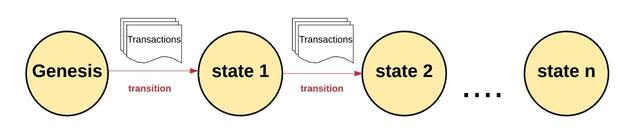
公式2-4是从区块的角度来描述状态的转化过程。 公式2: t+1时的状态,是由t时的状态经过区块B转变而来。转变函数为。
公式3: 区块B是包含了一系列交易T的集合。
公式4: 区块的状态转变函数,相当于逐条的执行交易的状态转变,然后完成所有交易转变后再经过进行一次状态转换。(这个地方实际上是给矿工挖坑奖励。)
在以太坊中的实际情况就是区块验证和执行的过程。
- 逐一的执行交易(也就是使用交易转变函数操作状态集)。实际就是交易比方是A向B转10ether,则A账户值-10,B账户值+10。(当然执行过程中还有gas消耗,这个后面详述)
- 等整个block交易执行完毕后,需要对矿工进行奖励。也就是需要使用进行一次状态转换。
1.1 货币
以太坊中有以下四种单位的货币。以太坊中的各种计算都是以Wei为单位的。 (看有的地方好像有更多种单位,我这边是直接按照黄皮书走的)
| Multiplier | Name |
|---|---|
| 10⁰ | Wei |
| 10¹² | Szabo |
| 10¹⁵ | Finney |
| 10¹⁸ | Ether |
1.2 分叉
以太坊的正确运行建立在其链上只有一个链是有效的,所有人都必须要接受它。拥有多个状态(或多个链)会摧毁这个系统,因为它在哪个是正确状态的问题上不可能得到统一结果。如果链分叉了,你有可能在一条链上拥有10个币,一条链上拥有20个币,另一条链上拥有40个币。在这种场景下,是没有办法确定哪个链才是最”有效的“。不论什么时候只要多个路径产生了,一个”分叉“就会出现。 为了确定哪个路径才是最有效的以及防止多条链的产生,以太坊使用了一个叫做“GHOST协议(GHOST protocol.)”的数学机制。
简单来说,GHOST协议就是让我们必须选择一个在其上完成计算最多的路径。一个方法确定路径就是使用最近一个区块(叶子区块)的区块号,区块号代表着当前路径上总的区块数(不包含创世纪区块)。区块号越大,路径就会越长,就说明越多的挖矿算力被消耗在此路径上以达到叶子区块。
二、 区块、状态与交易
2.1 世界状态
以太坊中的世界状态指地址(Address)与账户状态(Account State)的集合。世界状态并不是存储在链上,而是通过Merkle Patricia tree来维护。 账户状态(Account State)包含四个属性。
- nonce: 如果账户是一个外部拥有账户,nonce代表从此账户地址发送的交易序号。如果账户是一个合约账户,nonce代表此账户创建的合约序号。用来表示。
- balance:此地址拥有Wei的数量。1Ether=10^18Wei。用来表示。
- storageRoot: 理论上是指Merkle Patricia树的根节点256位的Hash值。用来表示。公式6中有介绍。
- codeHash:此账户EVM代码的hash值。对于外部拥有账户,codeHash域是一个空字符串 的Hash值。对于合约账户,就是代码的Hash作为codeHash保存。用来表示。
// github.com/ethereum/go-ethereum/core/state/state_object.go
type Account struct {
	Nonce    uint64
	Balance  *big.Int
	Root     common.Hash // merkle root of the storage trie
	CodeHash []byte
}
关于storageRoot的补充
公式6, 由于有些时候我们不仅需要state的hash值的trie,而是需要其对应的kv数据也包含其中。所以以太坊中的存储State的树,不仅包含State的hash,同时也包含了存储这个账户的address的hash和它对应的data也就是其Account的值的数据对的集合。这里storageRoot实际上是这样的树的根节点hash值。
公式7,指state对应的kv数据的RLP的形式化表示,是k的hash值作为key,value是v的RLP表示。也就是以太坊中实际存储的state是账户address的hash ,与其数据Account内容的RLP 。
公式8,指公式7中的k是32的字符数组。这个是由KECCAK256算法保证的。
注:原本公式8中要求的是v是个正整数,但是我看来下代码和下文公式10,感觉这里的v都应该是Account的内容
一些符号化定义
以太坊中的账户有两类,一类是外部账户,一类是合约账户。其中外部账户被私钥控制且没有任何代码与之关联。合约账户,被它们的合约代码控制且有代码与之关联。以下几个公式定义了账户的各种状态。
其中
公式9,定义了函数,意思是若账户不为空,则返回账户。
公式10,定义,其实就是我们上面公式7,解释,对的时候的kv对。包括address的hash值,以及Account内容的RLP结果。
公式11与公式12,对账户做了定义,表示账户要么为空,要么就是一个a为20个长度的字符,其nonce值为小于2²⁵⁶的正整数,balance值为小于2²⁵⁶的正整数,storageRoot为32位的字符,codeHash为32的字符。
公式13,定义了空账户。若一个账户,其地址为空字符,并且该账户nonce值为0,balance值也为0.
公式14,定义了死账户,死账户要么为空,要么是一个EMPTY账户。
2.2 交易
- nonce: 与发送该交易的账户的nonce值一致。用表示。
- gasPrice: 表示每gas的单价为多少wei。用表示。
- gasLimit:执行该条交易最大被允许使用的gas数目。用表示。
- to:160位的接受者地址。当交易位创建合约时,该值位空。用表示。
- value:表示发送者发送的wei的数目。该值为向接受者转移的wei的数目,或者是创建合约时作为合约账户的初始wei数目。用表示。
- v,r,s: 交易的签名信息,用以决定交易的发送者。分别用,,表示。
- init:如果是创建合约的交易,则init表示一段不限长度的EVM-Code用以合约账户初始化的过程。用表示。
- data: 调用合约的交易,会包含一段不限长度的输入信息,用表示。
// github.com/ethereum/go-ethereum/core/types/transaction.go
type Transaction struct {
	data txdata
	// caches
	hash atomic.Value
	size atomic.Value
	from atomic.Value
}
type txdata struct {
	AccountNonce uint64          `json:"nonce"    gencodec:"required"`
	Price        *big.Int        `json:"gasPrice" gencodec:"required"`
	GasLimit     uint64          `json:"gas"      gencodec:"required"`
	Recipient    *common.Address `json:"to"       rlp:"nil"` // nil means contract creation
	Amount       *big.Int        `json:"value"    gencodec:"required"`
	Payload      []byte          `json:"input"    gencodec:"required"`

	// Signature values
	V *big.Int `json:"v" gencodec:"required"`
	R *big.Int `json:"r" gencodec:"required"`
	S *big.Int `json:"s" gencodec:"required"`

	// This is only used when marshaling to JSON.
	Hash *common.Hash `json:"hash" rlp:"-"`
}
一些符号化定义
以太坊中根据交易中的to值是否为空,可以判断交易是创建合约还是执行合约。
公式15表示,如果to的值为空,则交易是创建合约的交易,需要有init数据。交易的RLP形式化可以表示为nonce ,gasPrice , gasLimit , to ,value ,init ,“v ,r, s” , , 。如果不为空,则交易是执行合约的交易,需要有data数据。交易的RLP形式化可以表示为nonce ,gasPrice , gasLimit , to ,value ,data ,“v ,r, s” , , 。
公式16,是对交易的各个字段限制的符号化定义。其意思是nonce、value、gasPrice、gasLimit以及特殊的用来验证签名的r和s 都是小于2²⁵⁶的正整数,用来验证签名的v ()是小于2⁵的正整数。而init和data都是未知长度的字符数组。
公式17,是对的定义,即小于2ⁿ的正整数。
公式18,是对交易中的to字段的符号化定义,当其不为空的时候,是20位的字符,为空的时候是0位字符。
2.3 区块
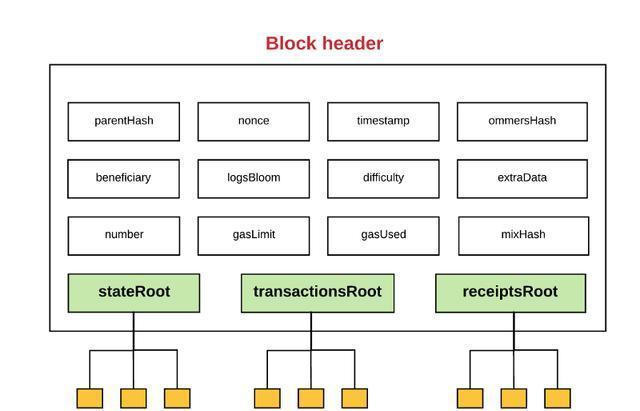
以太坊中的一个区块由区块头Header,以及交易列表,以及ommerblock的header集合三部分组成。
Header包括以下字段。
- parentHash: 父节点的hash值。用表示。
- ommersHash: uncle节点的hash值,这块是跟GHOST相关的,用表示。
- beneficiary: 矿工address,用表示。
- stateRoot: 当所有交易都执行完毕后的世界状态树的根节点,用表示。
- transactionsRoot:交易列表的根节点,用表示。
- receiptsRoot:收据的根节点,用表示。
- logsBloom:日志过滤器,用表示。这个暂时没细看,不太确定。
- difficulty:区块难度,根据上一个区块的难度以及时间戳算出来的值,用表示。
- number:区块号,用表示。
- gasLimit: 区块的gas数量限制,即区块中交易使用掉的gas值不应该超过该值。用表示。
- gasUsed: 区块使用掉的gas数量,用表示。
- timestamp:时间戳,用表示。
- extraData:额外的数据,合法的交易对长度有限制,用表示。
- mixHash: 与nonce一起用作工作量证明,用表示。
- nonce:与mixHash一起用作工作量证明,用表示。
// github.com/ethereum/go-ethereum/core/types/block.go
// "external" block encoding. used for eth protocol, etc.
type extblock struct {
	Header *Header
	Txs    []*Transaction
	Uncles []*Header
}

// Header represents a block header in the Ethereum blockchain.
type Header struct {
	ParentHash  common.Hash    `json:"parentHash"       gencodec:"required"`
	UncleHash   common.Hash    `json:"sha3Uncles"       gencodec:"required"`
	Coinbase    common.Address `json:"miner"            gencodec:"required"`
	Root        common.Hash    `json:"stateRoot"        gencodec:"required"`
	TxHash      common.Hash    `json:"transactionsRoot" gencodec:"required"`
	ReceiptHash common.Hash    `json:"receiptsRoot"     gencodec:"required"`
	Bloom       Bloom          `json:"logsBloom"        gencodec:"required"`
	Difficulty  *big.Int       `json:"difficulty"       gencodec:"required"`
	Number      *big.Int       `json:"number"           gencodec:"required"`
	GasLimit    uint64         `json:"gasLimit"         gencodec:"required"`
	GasUsed     uint64         `json:"gasUsed"          gencodec:"required"`
	Time        *big.Int       `json:"timestamp"        gencodec:"required"`
	Extra       []byte         `json:"extraData"        gencodec:"required"`
	MixDigest   common.Hash    `json:"mixHash"          gencodec:"required"`
	Nonce       BlockNonce     `json:"nonce"            gencodec:"required"`
}
// Receipt represents the results of a transaction.
type Receipt struct {
	// Consensus fields
	PostState         []byte `json:"root"`
	Status            uint   `json:"status"`
	CumulativeGasUsed uint64 `json:"cumulativeGasUsed" gencodec:"required"`
	Bloom             Bloom  `json:"logsBloom"         gencodec:"required"`
	Logs              []*Log `json:"logs"              gencodec:"required"`

	// Implementation fields (don't reorder!)
	TxHash          common.Hash    `json:"transactionHash" gencodec:"required"`
	ContractAddress common.Address `json:"contractAddress"`
	GasUsed         uint64         `json:"gasUsed" gencodec:"required"`
}
区块的符号化定义
公式19,表示区块由三部分组成,区块头,交易列表,以及ommerblock的header集合。
2.3.1 交易收据
以太坊中为了将交易的信息进行编码,以方便索引以及查找或者零知识证明等相关的东西,为每条交易定义了一定收据。对于第i个交易,其收据用[i]表示。 每条收据都是一个四元组,包括区块当前累计使用的gas值,交易执行产生的log ,日志过滤器,以及状态码。
公式20对区块头中的收据作了定义,收据是个四元组,四元组定义如前文。
公式21,收据的RLP形式化表示为。其中在之前版本的协议中是交易执行之前的stateRoot。现在被替换为0.
公式22,表示状态码是正整数。
公式23对收据中当前累计使用的gas值,和日志过滤器进行了描述。显然累计gas值是一个正整数。而日志过滤器是256位字符。
公式24对交易执行的日志进行了解释。
公式25对其限制进行了描述。是日志条目的序列。日志条目需要包括纪录日志者的地址,以及日志话题分类,以及实际数据。日志条目用O来表示,用表示日志纪录者的address,用来表示一些列32位字符的日志主题(log topics),用来表示字符数据。其中日志纪录者的address 是20位字符,每一个日志分类话题是一个32位字符,而日志数据是未知长度的字符。
公式26-30.对日志过滤函数做了定义,这块涉及到东西是数据操作层面的,不影响对流程的理解。暂不作解释。
2.3.2 整体的合法性
上面介绍过了区块包含区块头,区块交易列表,以及区块的ommer区块的头三部分。以太坊中判断一个区块是否合法,首先需要对区块整体上做合法性判断。见公式31
- 其区块头的状态树的根stateRoot也就是 ,是否确实是状态树的根。
- 其区块头的ommerHash也就是 ,是否与区块的ommer区块的头部分的hash值一致。
- 其区块头中的transactionRoot也就是即区块中交易的树的根,是否和区块存储的交易列表中的交易一一对应。一一对应关系见公式32,是将交易所在列表中的索引的RLP作为键,交易内容v的RLP作为值的键值对。
- 其区块头中的recieptRoot也就是,即区块中收据的树的根,是否和区块存储的交易列表一一对应,是不是每条交易都有一条相应的收据。一一对应关系见公式32,是将收据所在列表中的索引的RLP作为键,收据内容v的RLP作为值的键值对。
- 区块头中logsBloom也就是,是否包含了区块的交易的所有日志。
- 执行该区块之前的状态树的根节点,是否与其父区块的中的根节点一致。见公式33.
2.3.3 序列化
对区块,以及区块头的序列化表示如下。
公式34是区块头的序列化表示。
公式35是区块的序列化表示,即分别将区块头序列化,区块的交易列表,ommer区块头序列化。其中交易序列化函数见公式15.
公式36表示列表序列化和当个序列化的关系,列表的序列化,就是把列表中的元素分别序列化,然后将结果组成列表。
公式37是对区块头中属性的限制规定:
- 各种hash值都是32位字符。包括parentHash ,ommerHash , stateRoot , transactionRoot , RecieptRoot , mixHash 。
- 受益人也就是挖矿的人的地址beneficiary ,是20位字符。
- 日志过滤器logBoom ,是256位字符。
- 难度,区块号,gas限制,用掉的gas等都是正整数。difficulty , Number ,gasLimit gasUsed
- 时间戳timestamp 是个大的正整数,其值小于2²⁵⁶。
- 额外的数据extraData 是未知长度字符。
- nonce 是8位的字符。
2.3.4 区块头的合法性
确定区块是否合法除了整体性的合法校验,还需要对区块头进行更进一步的校验。主要校验规则有以下几点:
- parentHash正确。即parentHash与其父区块的头的hash一致。
- number为父区块number值加一。
- difficuilty难度正确。区块合理的难度跟父区块难度,以及当前区块时间戳和父区块时间戳间隔以及区块编号有关。难度可以起到一定的调节出块时间的作用。,可以看出当出块变快(也就是出块间隔变小之后)难度会增加,相反难度会减小。
- gasLimit和上一个区块的差值在规定范围内。
- gasUsed小于等于gasLimit
- timestamp时间戳必须大于上一区块的时间戳。
- mixHash和nonce必须满足PoW。
- extraData最多为32个字节。
// verifyHeader checks whether a header conforms to the consensus rules of the
// stock Ethereum ethash engine.
// See YP section 4.3.4. "Block Header Validity"
func (ethash *Ethash) verifyHeader(chain consensus.ChainReader, header, parent *types.Header, uncle bool, seal bool) error {
	// Ensure that the header's extra-data section is of a reasonable size
      // 验证extraData的长度
	if uint64(len(header.Extra)) > params.MaximumExtraDataSize {
		return fmt.Errorf("extra-data too long: %d > %d", len(header.Extra), params.MaximumExtraDataSize)
	}
	// Verify the header's timestamp
    // 验证时间戳是否超过大小限制,是否过大,是否大于上一区块的时间戳等
	if uncle {
		if header.Time.Cmp(math.MaxBig256) > 0 {
			return errLargeBlockTime
		}
	} else {
		if header.Time.Cmp(big.NewInt(time.Now().Add(allowedFutureBlockTime).Unix())) > 0 {
			return consensus.ErrFutureBlock
		}
	}
	if header.Time.Cmp(parent.Time) <= 0 {
		return errZeroBlockTime
	}

      // 验证难度是否正确
	// Verify the block's difficulty based in it's timestamp and parent's difficulty
	expected := ethash.CalcDifficulty(chain, header.Time.Uint64(), parent)

	if expected.Cmp(header.Difficulty) != 0 {
		return fmt.Errorf("invalid difficulty: have %v, want %v", header.Difficulty, expected)
	}
	// Verify that the gas limit is <= 2^63-1
	cap := uint64(0x7fffffffffffffff)
     //验证gasLimit是否超了上限
	if header.GasLimit > cap {
		return fmt.Errorf("invalid gasLimit: have %v, max %v", header.GasLimit, cap)
	}
     //验证已用的gas值是否小于等于gasLimit
	// Verify that the gasUsed is <= gasLimit
	if header.GasUsed > header.GasLimit {
		return fmt.Errorf("invalid gasUsed: have %d, gasLimit %d", header.GasUsed, header.GasLimit)
	}

	// Verify that the gas limit remains within allowed bounds
    //判断gasLimit与父区块的gasLimit差值是否在规定范围内
	diff := int64(parent.GasLimit) - int64(header.GasLimit)
	if diff < 0 {
		diff *= -1
	}
	limit := parent.GasLimit / params.GasLimitBoundDivisor

	if uint64(diff) >= limit || header.GasLimit < params.MinGasLimit {
		return fmt.Errorf("invalid gas limit: have %d, want %d += %d", header.GasLimit, parent.GasLimit, limit)
	}
	// Verify that the block number is parent's +1
        //验证区块号,是否是父区块号+1
	if diff := new(big.Int).Sub(header.Number, parent.Number); diff.Cmp(big.NewInt(1)) != 0 {
		return consensus.ErrInvalidNumber
	}
	// Verify the engine specific seal securing the block
     //验证PoW
	if seal {
		if err := ethash.VerifySeal(chain, header); err != nil {
			return err
		}
	}
	// If all checks passed, validate any special fields for hard forks
	if err := misc.VerifyDAOHeaderExtraData(chain.Config(), header); err != nil {
		return err
	}
	if err := misc.VerifyForkHashes(chain.Config(), header, uncle); err != nil {
		return err
	}
	return nil
}
校验区块号和区块hash的符号化表示
公式39表示,parentHash值应该为父节点Header的hash值。
公式40表示,number为父节点number + 1.
难度计算的符号化表示
公式41-46为difficulty的计算方法。
公式41,42表示,当区块编号为0的时候其难度值是固定好的,在这里用表示,其值为131072.对于其他区块,其难度值需要根据其父区块难度值以及一些其他因素,出块的间隔时间,区块编号等有关进行调节的,若小于,则难度值调整为。
公式43,调节系数(the adjustment factor )的定义。
公式44,难度系数(diculty parameter)的定义。该系数主要与出块间隔时间有关,当间隔大的时候,系数变大,难度也会相应变大,当间隔小的时候,系数变小,难度也会变小。使得区块链在整体上出块时间是趋于稳定的。其中值根据父节点的uncle节点是否为空而有所区别,可以看出当父节点的uncle不为空的时候,值为2,说明当前的分叉程度较大,适当调大难度,一定程度上会减少分叉。
公式45,46,“difficulty bomb”, or “ice age” 的定义。(看说明好像是为了将来切PoS共识的时候,调节难度用)
// CalcDifficulty is the difficulty adjustment algorithm. It returns
// the difficulty that a new block should have when created at time
// given the parent block's time and difficulty.
func (ethash *Ethash) CalcDifficulty(chain consensus.ChainReader, time uint64, parent *types.Header) *big.Int {
	return CalcDifficulty(chain.Config(), time, parent)
}

// CalcDifficulty is the difficulty adjustment algorithm. It returns
// the difficulty that a new block should have when created at time
// given the parent block's time and difficulty.
func CalcDifficulty(config *params.ChainConfig, time uint64, parent *types.Header) *big.Int {
	next := new(big.Int).Add(parent.Number, big1)
	switch {
	case config.IsByzantium(next):
		return calcDifficultyByzantium(time, parent)
	case config.IsHomestead(next):
		return calcDifficultyHomestead(time, parent)
	default:
		return calcDifficultyFrontier(time, parent)
	}
}

// 黄皮书中的介绍的是Byzantium难度协议,所以这里只给出相应的代码。其他几种难度调节协议只是参数值上有区别。
// calcDifficultyByzantium is the difficulty adjustment algorithm. It returns
// the difficulty that a new block should have when created at time given the
// parent block's time and difficulty. The calculation uses the Byzantium rules.
func calcDifficultyByzantium(time uint64, parent *types.Header) *big.Int {
	// https://github.com/ethereum/EIPs/issues/100.
	// algorithm:
	// diff = (parent_diff +
	//         (parent_diff / 2048 * max((2 if len(parent.uncles) else 1) - ((timestamp - parent.timestamp) // 9), -99))
	//        ) + 2^(periodCount - 2)

	bigTime := new(big.Int).SetUint64(time)
	bigParentTime := new(big.Int).Set(parent.Time)

	// holds intermediate values to make the algo easier to read & audit
	x := new(big.Int)
	y := new(big.Int)

	// (2 if len(parent_uncles) else 1) - (block_timestamp - parent_timestamp) // 9
	x.Sub(bigTime, bigParentTime)
	x.Div(x, big9)
	if parent.UncleHash == types.EmptyUncleHash {
		x.Sub(big1, x)
	} else {
		x.Sub(big2, x)
	}
	// max((2 if len(parent_uncles) else 1) - (block_timestamp - parent_timestamp) // 9, -99)
	if x.Cmp(bigMinus99) < 0 {
		x.Set(bigMinus99)
	}
	// parent_diff + (parent_diff / 2048 * max((2 if len(parent.uncles) else 1) - ((timestamp - parent.timestamp) // 9), -99))
	y.Div(parent.Difficulty, params.DifficultyBoundDivisor)
	x.Mul(y, x)
	x.Add(parent.Difficulty, x)

	// minimum difficulty can ever be (before exponential factor)
	if x.Cmp(params.MinimumDifficulty) < 0 {
		x.Set(params.MinimumDifficulty)
	}
	// calculate a fake block number for the ice-age delay:
	//   https://github.com/ethereum/EIPs/pull/669
	//   fake_block_number = min(0, block.number - 3_000_000
	fakeBlockNumber := new(big.Int)
	if parent.Number.Cmp(big2999999) >= 0 {
		fakeBlockNumber = fakeBlockNumber.Sub(parent.Number, big2999999) // Note, parent is 1 less than the actual block number
	}
	// for the exponential factor
	periodCount := fakeBlockNumber
	periodCount.Div(periodCount, expDiffPeriod)

	// the exponential factor, commonly referred to as "the bomb"
	// diff = diff + 2^(periodCount - 2)
	if periodCount.Cmp(big1) > 0 {
		y.Sub(periodCount, big2)
		y.Exp(big2, y, nil)
		x.Add(x, y)
	}
	return x
}
gasLimit限制的符号化表示
公式47表示区块的gasLimit必须大于等于5000,且其和上一个区块的gasLimit差值不超过
时间戳的符号化表示
公式48表示当前区块的时间戳必须大于父区块的时间戳。(代码中要求区块的时间戳不能比当前时间大15秒以上)
mixHash和nonce相关符号化表示
参考资料: